

From Pequeno Príncipe to the world: young researchers take Brazilian science to centers of excellence
PhD students from FPP and IPP expand the frontiers of knowledge and spread the Hospital’s mission beyond Brazil, strengthening science and the future of child and adolescent health
The science born in the classrooms of Pequeno Príncipe College (known as FPP) and in the laboratories of the Pelé Pequeno Príncipe Research Institute (known as IPP) has crossed borders. In recent months, four PhD students of the Graduate Program in Biotechnology Applied to Child and Adolescent Health have embarked — or are about to embark — on sandwich PhD internships at renowned international institutions. More than an academic experience, this immersion in centers of excellence strengthens the training of young scientists and projects the program on the global scientific stage.
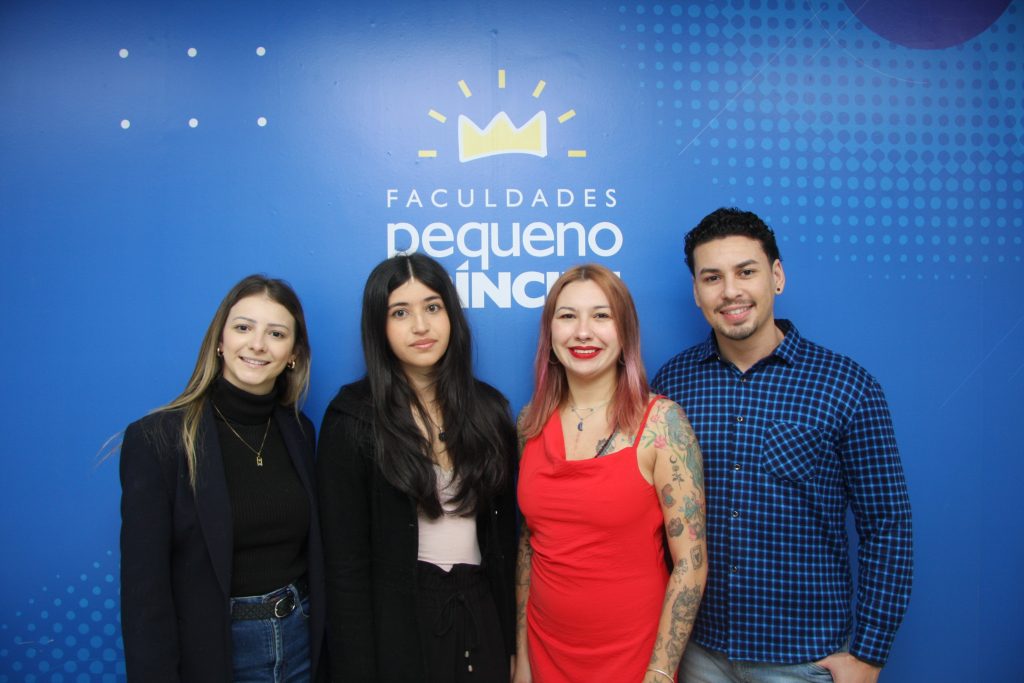
“Reflecting the maturity of our program, these achievements highlight the transformative role of internationalization. It not only broadens horizons, but also promotes a globalized education for our students, preparing them for the great challenges of health,” stresses Rosiane Guetter Mello, director of Research and Graduate Studies at FPP and collaborating researcher at IPP.
The internationalization of graduate programs is a strategic priority of Coordination of Superior Level Staff Improvement (Capes, abbreviation in Portuguese), which recognizes the fundamental role of networked science in advancing knowledge. The institution fosters academic cooperation, the mobility of faculty and students, and the consolidation of foreign partnerships. These programs offer scholarships, support for exchanges, and collaborative project funding, in addition to encouraging the development of internationalization plans by Brazilian universities. In this way, Capes values the insertion of national research in global contexts, promoting greater visibility, scientific impact, and Brazil’s integration into international development agendas.
“The presence of our PhD students in leading institutions abroad not only enriches their individual research but also opens paths for institutional collaborations that impact the entire academic and scientific community of Pequeno Príncipe,” says Regina Poleza Toazza, coordinator of the Education and International Relations Center (known as NERI) at FPP.
The first to blaze trails
Maria Eduarda de Andrade Galiciolli was a pioneer: the first student of the program to win a scholarship from the Sandwich Doctorate Program (PDSE, abbreviation in Portuguese), by Capes. She spent six months at Mercer University, in the United States, where she advanced her research on thimerosal — a preservative present in multi-dose vaccines offered by the Brazilian Public Health System (known as SUS).
“Brazil still uses thimerosal, but there is little scientific information about safe limits of use. This experience allowed me access to infrastructure and methodologies that changed my way of thinking about science,” she reveals. Back in the country, Maria Eduarda expanded contact networks and participated in conferences in the USA, an experience that boosted her trajectory to her current position at Oswaldo Cruz Foundation (Fiocruz) Paraná.
For her advisor, Professor Claudia Sirlene de Oliveira, the student’s achievement “opened doors for other students of the program to seek similar opportunities, strengthening the Pequeno Príncipe culture of internationalization.”
Cutting-edge technology and double degree
The journey of Nádia Nascimento da Rosa began in the Research Group on Advanced Therapy and Cellular Biotechnology in Regenerative Medicine, under the guidance of neurologist Katherine Athayde Teixeira de Carvalho. Her work — creating a 3D structure of the substantia nigra with differentiated stem cells — gained momentum with a six-month internship at Maastricht University, in the Netherlands.
“At the MERLN Institute, I had access to technologies such as two-photon microscopy and high-precision bioprinting. It was transformative,” reports Nádia, who also achieved the possibility of double degree between FPP/IPP and the Dutch university.
For Katherine, “the results obtained contribute to new therapeutic perspectives in Parkinson’s and raise the international projection of our program.”
On August 12, FPP held the lecture International experiences in biotechnology in the USA and the Netherlands: how did we get here?, in the institution’s auditorium, with presentations by Maria Eduarda de Andrade Galiciolli and Nádia Nascimento da Rosa, sharing their trajectories and learnings obtained abroad.
Opioids in international perspective
PhD student Luíza Siqueira Lima departs in September for the University of Padua (Università degli Studi di Padova), in Italy, thanks to the Mobility Confap Italy 2025 call. There, she will conduct a systematic review and meta-analysis on the use of opioids in Europe, expanding comparisons with the Brazilian reality.
“Many countries are experiencing an opioid epidemic. Understanding their patterns of use and consequences will bring valuable insights to Brazil,” highlights Luíza.
Advisor Claudia Oliveira emphasizes: “This experience will allow deepening in topics little explored in Brazil, strengthening not only the student’s training but the impact of the project as a whole.”
Heading to Australia
The next to cross oceans will be Leonardo Vinícius Barbosa, approved in the PDSE to develop part of his research at the Frazer Institute, University of Queensland, in Australia — a world reference in cancer studies.
“They have state-of-the-art equipment for spatial transcriptome analysis, which will broaden our understanding of the tumor microenvironment and help identify new therapeutic targets,” explains Barbosa.
For his advisor Cleber Machado de Souza, the achievement “represents a milestone for the internationalization of graduate studies and opens new possibilities for scientific collaboration.”
The program and its reach
The Graduate Program in Biotechnology Applied to Child and Adolescent Health, the result of a partnership between FPP and IPP, integrates cutting-edge research and academic training, with an emphasis on solutions for child and youth health problems. Internationalization is one of its strategic pillars, whether through physical mobility or through so-called “internationalization at home.”
Internationalization without leaving Brazil
Research coordinated by Regina Poleza Toazza, from the Graduate Program in Health Sciences Teaching at FPP, reveals that 89.7% of Brazilian higher education institutions in the health area already adopt internationalization at home (IaH) actions — international experiences without the need for physical displacement. “IaH is a powerful tool to broaden academic and cultural horizons, even for those who cannot travel,” says Regina.