

Pequeno Príncipe Hospital nears its 500th craniosynostosis surgery and reaffirms national leadership in pediatric neurosurgery
Interdisciplinarity, high complexity, and humanized care sustain one of the largest case volumes in Brazil
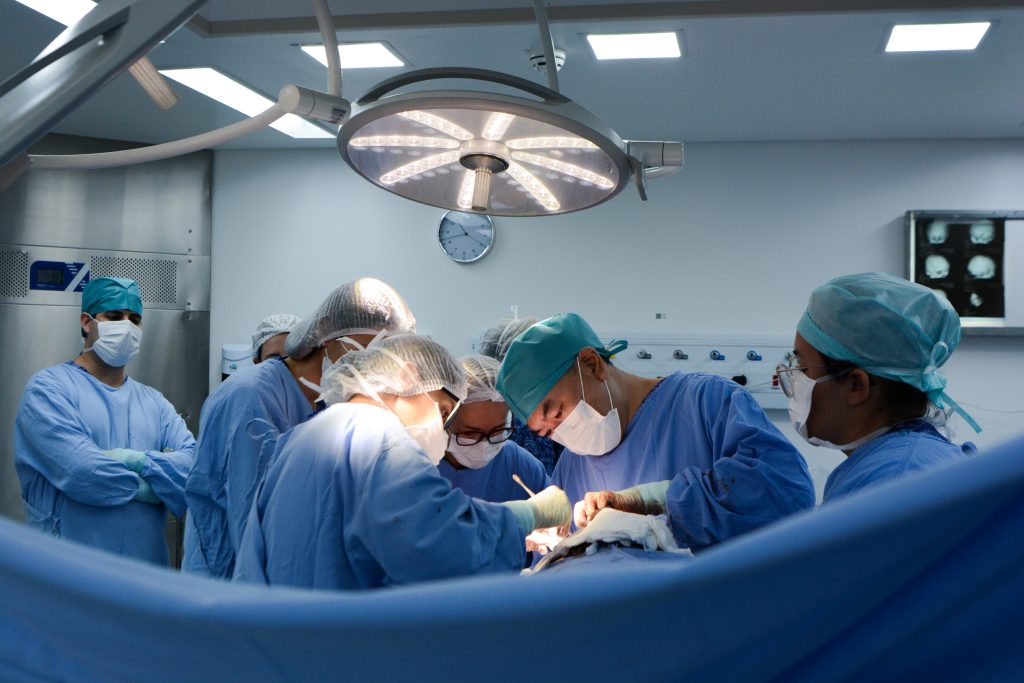
At Pequeno Príncipe Hospital, each neurosurgical procedure is the union of refined technique, cutting-edge technology, and care that recognizes the uniqueness of every boy and girl treated. The Neurosurgery Service, one of the most complete in the country, is synonymous with interdisciplinarity and experience accumulated over decades — and, at this moment, celebrates a historic and important milestone: nearing its 500th craniosynostosis surgery in the last ten years.
Craniosynostosis, characterized by the premature closure of one or more cranial sutures, is rare, but at Pequeno Príncipe it has become routine. This is because the institution receives highly complex cases from all over Brazil, from states where there is no structure or specialized team for this type of procedure. “More than an aesthetic correction, surgery is vital: if not treated early, it can impact the patient’s psychomotor and cognitive development, cause pain, irritability, and in more severe cases, intracranial hypertension. Therefore, early diagnosis — ideally within the first four to six months of life — and treatment in a specialized environment are decisive to ensure quality of life and prevent sequelae,” explains neurosurgeon Adriano Keijiro Maeda, head physician of the Neurosurgery Service.
The accumulated experience at the Hospital is impressive: between 40 and 50 cases are operated per year, with a survival rate of 100% and no deaths recorded in the last decade in this type of procedure. “Our success is due to the standardization of protocols, joint work with plastic and craniofacial surgery, the excellence of the pediatric anesthesia team — fundamental when dealing with babies and infants — and the structure of the pediatric ICU capable of providing intensive support immediately after surgery,” emphasizes the neurosurgeon. On average, children spend only 24 hours in the ICU and are discharged from the Hospital in four to five days, recovering safely and with multiprofessional follow-up.
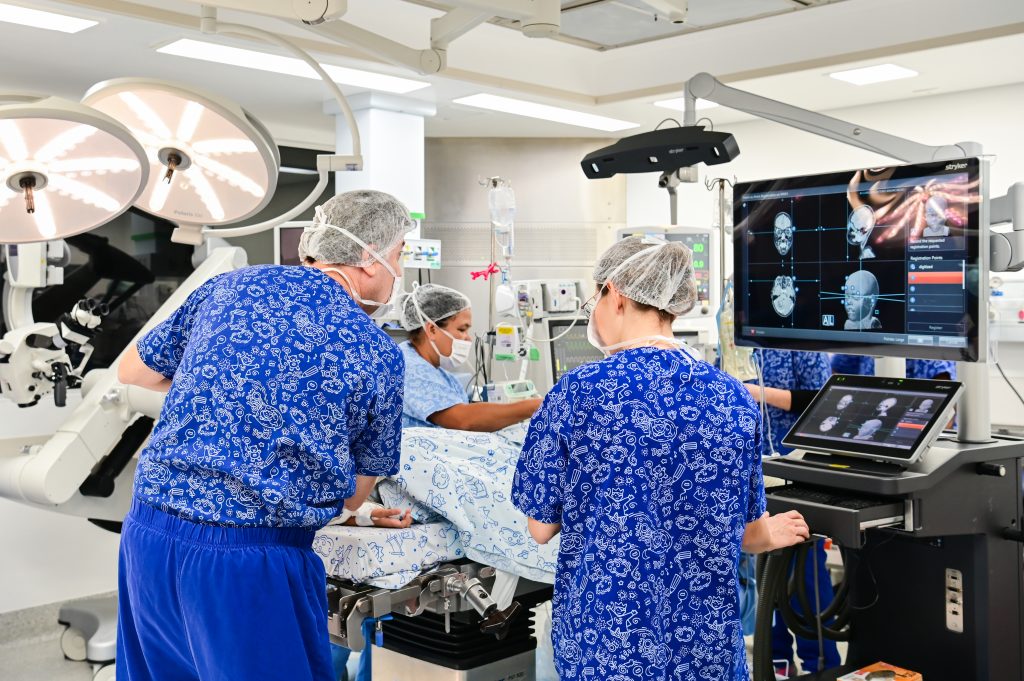
The Hospital’s Neurosurgery Service is also a reference in a wide range of complex procedures. The team includes specialists in brain tumors, hydrocephalus, functional epilepsy surgeries, vascular malformations, congenital malformations such as myelomeningocele repair, and treatment of cranial trauma. In addition, it works in partnership with orthopedics in spinal surgeries and spinal cord tumors, ensuring that each patient receives an integrated approach. This diversity of expertise, combined with constant collaboration with other specialties and pediatric care areas present in the Hospital, consolidates the institution as a national and Latin American reference in pediatric neurosurgery.
With advanced technological infrastructure — including the neuronavigation, the neuroendoscopy, and a surgical microscope in minimally invasive techniques — and a humanized approach, care begins even before the incision. While the anesthesia team begins preparations, the surgeon talks with parents and guardians, going over each stage of treatment previously discussed in the office, addressing questions, and transforming a moment of apprehension into one of trust.
With nearly 500 craniosynostosis surgeries performed, hundreds of complex cases treated annually, and a non-negotiable commitment to quality and humanization, the Neurosurgery Service of Pequeno Príncipe Hospital remains one of the institution’s greatest sources of pride and a pillar in guaranteeing the right to health for boys and girls throughout Brazil.
Neurosurgery at Pequeno Príncipe Hospital
Surgical volume
– About 350 neurosurgeries per year
– 40 to 50 craniosynostosis surgeries per year
– Nearly 500 craniosynostosis surgeries in the last decade
– No deaths in craniosynostosis cases in the last decade
Procedures performed
– Brain tumors
– Vascular malformations
– Hydrocephalus
– Congenital malformations such as myelomeningocele and craniosynostosis
– Functional epilepsy surgeries
– Cranial trauma
– Spinal surgeries
– Spinal cord tumors
Differentials
– Multiprofessional team
– Anesthesiologists specialized in pediatrics
– Pediatric ICU
– Neuronavigation
– Surgical microscopy
– Using of minimally invasive techniques