
At Pequeno Príncipe, care and stimulation walk together in Early Childhood
In line with the new national policy, the Hospital combines high complexity, rehabilitation, education, culture, leisure, and guidance to parents and guardians to guarantee rights and promote the development of boys and girls from 0 to 6 years old
Brazil has just given a new boost to the protection of boys and girls in their early years. In August, the Integrated National Early Childhood Policy was established, bringing together the Federal Government, states, and municipalities around a common goal: ensuring that every child, from birth to age 6, has access to care, education, health, and protection that respect their uniqueness and potential. This is a legal instrument that reinforces and updates the principles already established in the Legal Framework for Early Childhood (Law No. 13,257/2016), in the Child and Adolescent Statute (Law No. 8,069/1990), and in Article 227 of the Brazilian Federal Constitution, recognizing that this is a decisive period for human development — when brain connections are shaped by every experience, affection, and stimulus.
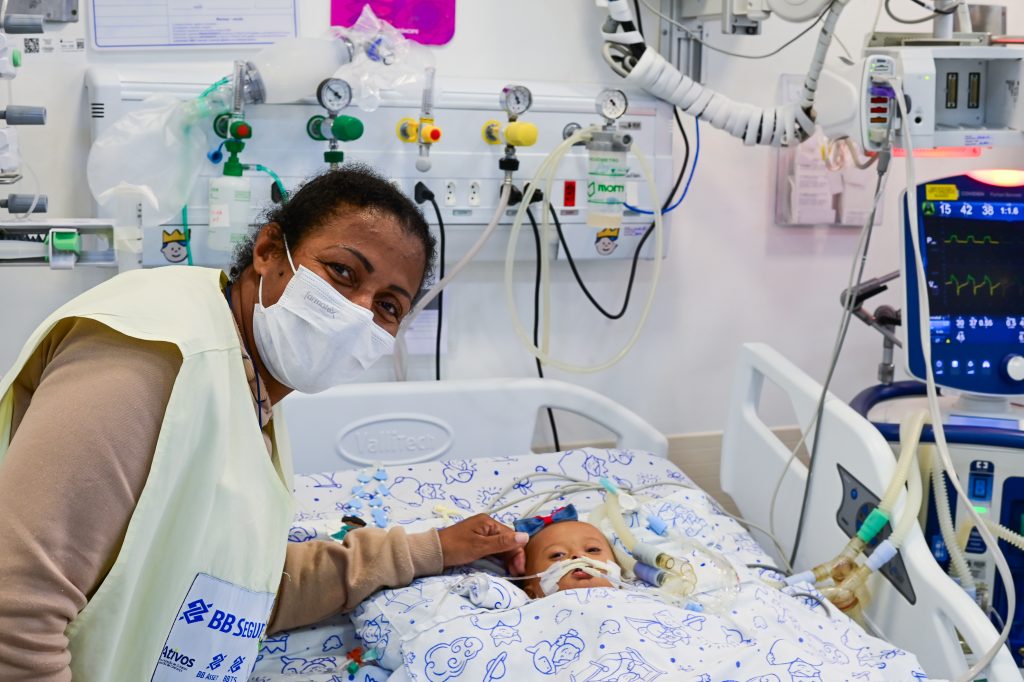
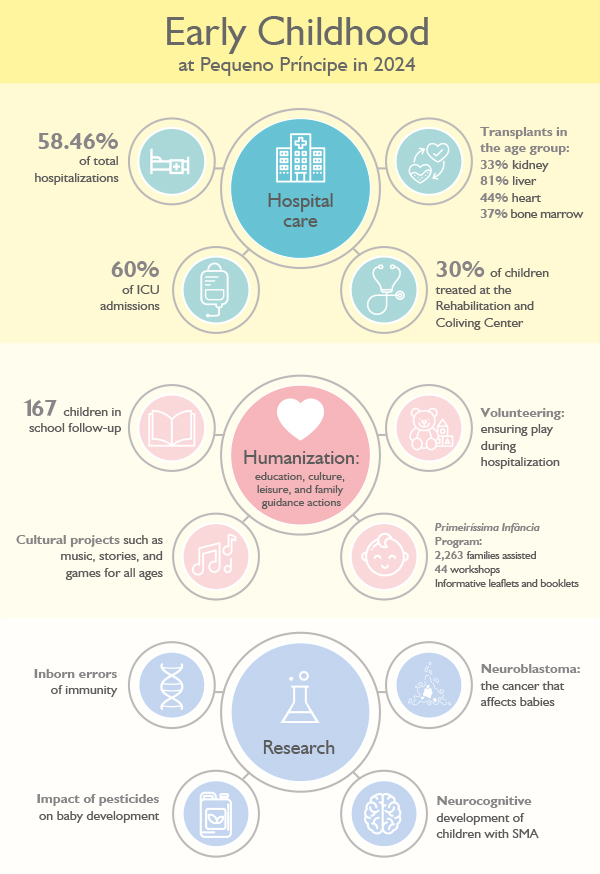
At Pequeno Príncipe Hospital, this understanding is already a daily practice. In 2024, more than half of the hospitalized patients — 58.46%, equivalent to 9,417 boys and girls — were between 0 and 6 years old. Among them, about 1,500 required ICU care, representing 60% of admissions in this category of hospitalization, which reveals a more critical health situation. It was also in this stage of life that 33% of kidney transplants performed by the Hospital, 81% of liver transplants, 44% of heart transplants, and 37% of bone marrow transplants took place. Each figure demonstrates the institution’s role in guaranteeing an elementary right: to receive specialized, high-complexity care, with the constant presence of the mother, father, or caregiver, to ensure their right to life.
This work also extends to the Rehabilitation and Coliving Center of Pequeno Príncipe, where in 2024, 53 children aged 0 to 6 were treated, representing about 30% of patients. In this space, the priority is to offer therapies suited to each diagnosis, taking advantage of the stage of greatest brain plasticity to maximize development. Early interventions have more lasting effects and impact not only future functionality and independence but also quality of life. In addition, the Rehabilitation and Coliving Center works with families, guiding them on how to stimulate children at home and strengthening the role of caregivers as active agents in rehabilitation.
Care beyond physical health
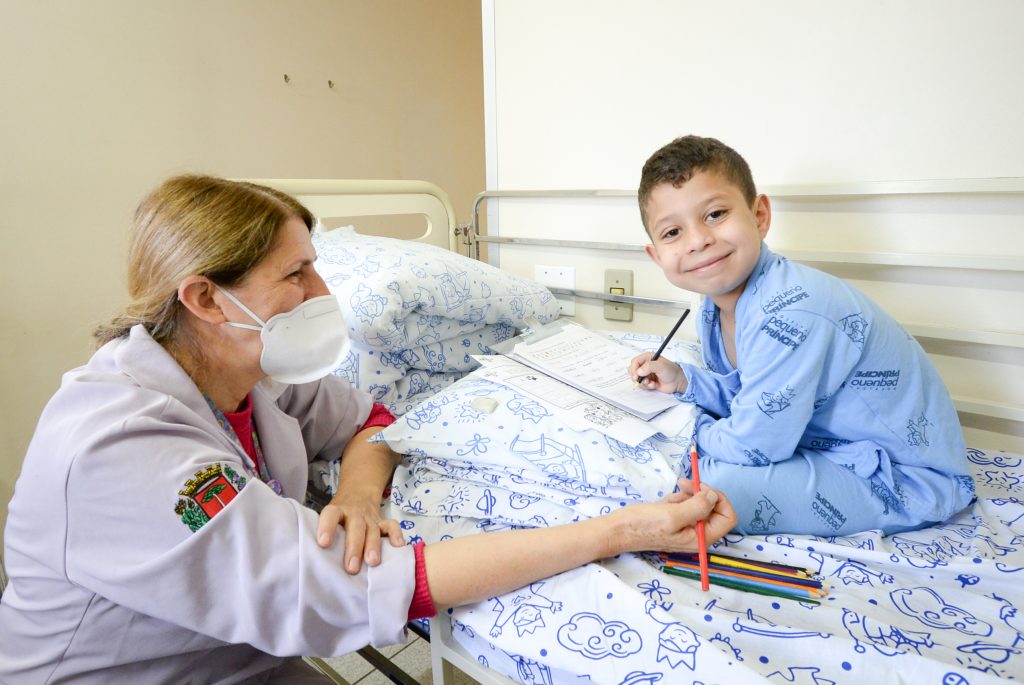
But caring for Early Childhood at Pequeno Príncipe goes far beyond highly specialized medical care. In 2024, 167 children up to 6 years old participated in schooling activities, which begin at age 4 in the Brazilian formal education system. Before that, from the cradle, the presence of education and culture is already felt. Cultural activities reach everyone, with music, stories, games, and initiatives that dialogue with public and private education networks, stimulating reasoning, language, expression, and bonding, thus strengthening cognitive, motor, and emotional skills.
The Primeiríssima Infância Program, developed by the Humanization Sector, is dedicated especially to children from 0 to 3 years old. During this period, guidance to families during hospitalization becomes a transformative encounter: at a moment of fragility, parents and guardians receive information, support, and practical examples of how to stimulate children, even in a hospital environment. “It is an exchange that expands repertoires and breaks cultural barriers that often limit the child’s abilities because of a diagnosis. In these workshops and consultations, questions arise that reveal curiosity and care: whether building a toy is better than buying one, how play can stimulate mobility, why music leaves such deep marks in memory, or what the real impact of screens on development is,” says the Hospital’s executive director, Ety Cristina Forte Carneiro.
Right to play
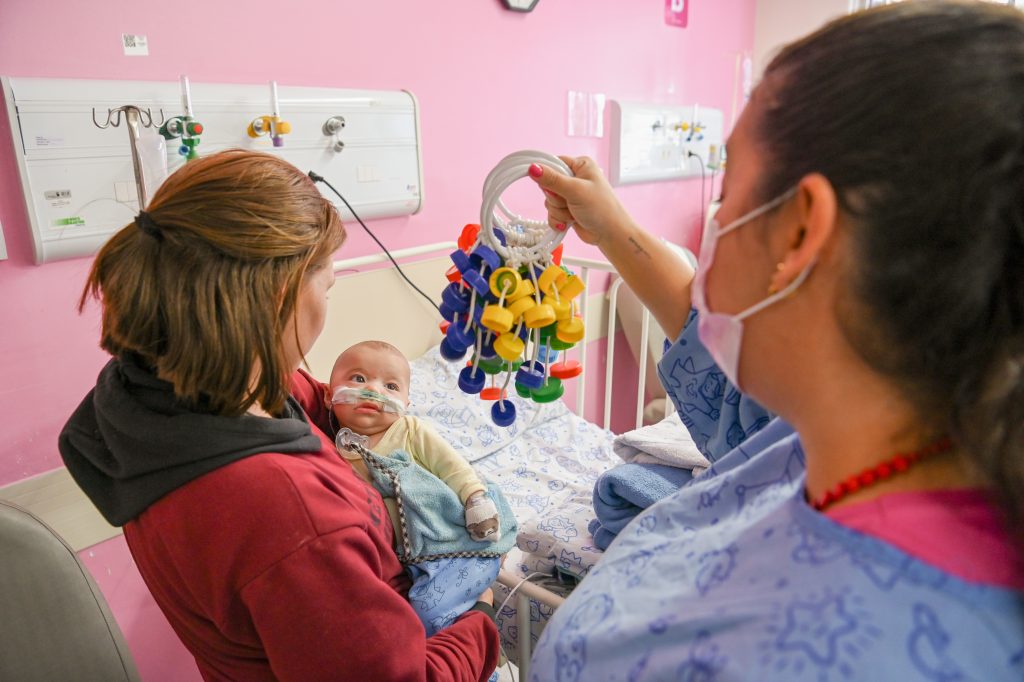
Volunteering, with its role as a humanizing agent, is part of this mechanism, because by playing with the little ones, the volunteer offers emotional comfort and gives new meaning to hospitalization.
Psychologist Rita Lous, manager of the institution’s Volunteering Service, explains that humanization initiatives not only help the child go through hospitalization with more lightness, preserving mental health, but also strengthen caregivers’ emotional bonds and self-esteem. “By experiencing stories, sounds, objects, and play, the child experiences the Hospital as a place where it is still possible to play, learn, and dream,” she emphasizes.
Science that protects
The commitment to Early Childhood is also manifested in the production of knowledge. At the Pelé Pequeno Príncipe Research Institute, scientific projects investigate diseases and conditions that affect boys and girls in their early years. During the month of August, the Institute’s social media released the series Science that Protects, which presents four ongoing studies aimed at this age group:
– Inborn errors of immunity;
– Neuroblastoma — a type of cancer that affects babies;
– The impact of pesticide exposure on children’s development; and
– The cognitive development of children with spinal muscular atrophy (SMA).
To watch this series, access the Science that Protects playlist on our YouTube channel.