

Pelé Pequeno Príncipe Research Institute receives recognition at the Finep Innovation Award — Southern Region
Team led by researcher Luciane Cavalli is awarded the Niède Guidon Medal, which recognizes the best project coordinated by women in Southern Brazil
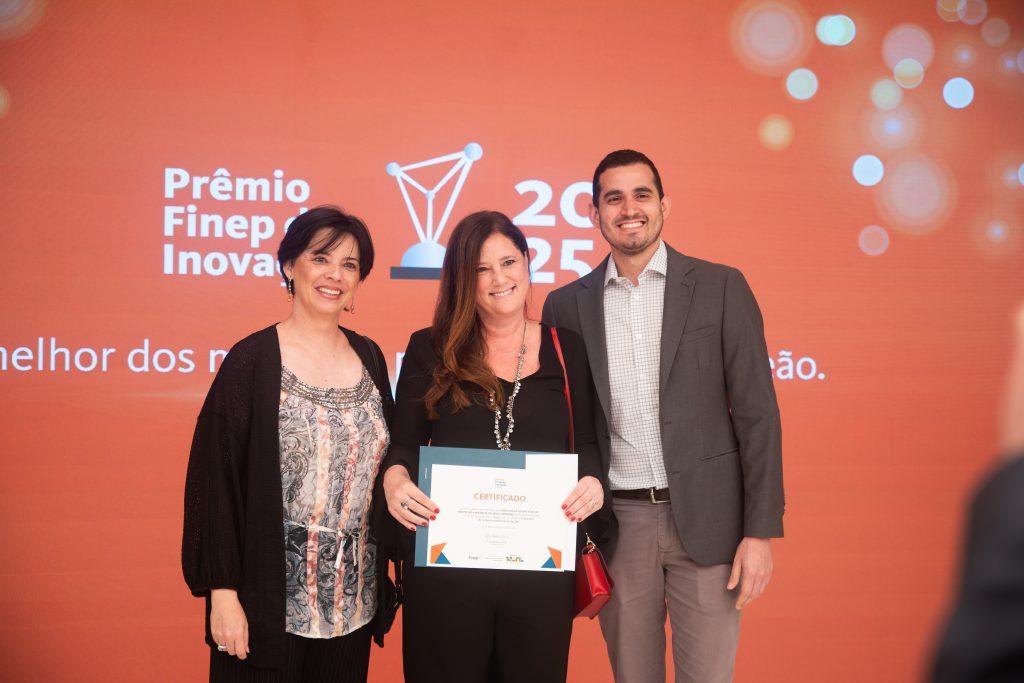
The Pelé Pequeno Príncipe Research Institute was recognized with the Highlight for Best Project Coordinated by Women at the Finep Innovation Award — Southern Region 2025, one of the country’s main national awards dedicated to science and technology.
The awarded project, Development of a cell reprogramming model applied to the clinic of pediatric patients with neuroblastoma, is coordinated by geneticist researcher Luciane Cavalli. Developed in partnership with the Pontifical Catholic University of Paraná (PUCPR) and the Carlos Chagas Institute (ICC-Fiocruz), it seeks to identify the most effective and least aggressive treatments for each child with neuroblastoma, based on the genetic analysis of tumor cells — an advancement in the field of precision medicine.
Recognition of female strength in science
The Highlight for Best Project Coordinated by Women is represented by the Niède Guidon Medal, which honors the Brazilian archaeologist who is a symbol of dedication to research and environmental preservation at Serra da Capivara National Park (located in the state of Piauí).
“I am grateful for the trust placed in my team, essentially formed by young, wonderful, tireless women who dedicate themselves to research every single day. I also thank the team at Pequeno Príncipe Hospital, who support us continuously, and I dedicate this award to the children and families who face neuroblastoma — for believing in science and in the hope of better treatment for their children,” emphasized Luciane.

Science with purpose
The project represents an advancement in the search for personalized treatments for childhood neuroblastoma, one of the most aggressive cancers in young children. The Institute’s team analyzes the DNA of tumor cells to identify genetic alterations and predict which medications may yield better results.
A distinguishing feature of the study is the maintenance of tumor cells from the patient in the laboratory, which allows testing different drugs before clinical application. The objective is to increase cure rates and reduce side effects, offering more effective, safer, and more humanized care.
Commitment to innovation and childhood
With this recognition, the Pequeno Príncipe Complex reaffirms its commitment to integrating care, teaching, and research to produce knowledge that transforms lives.
Through the Pelé Pequeno Príncipe Research Institute, the institution advances in building a future where science, innovation, and care walk together, ensuring that every child has the right to grow with health and hope.